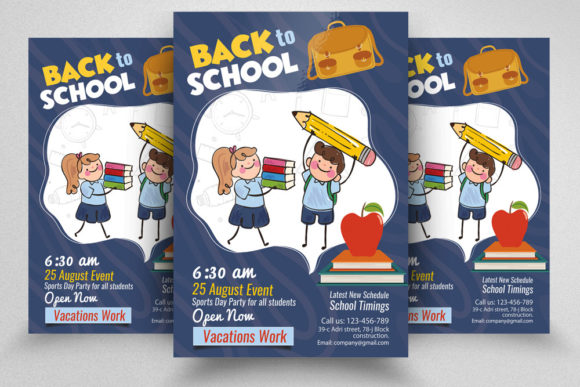
Back to School Party Poster Psd: A Strategic Tool for Timely Campaigns and Clear Communication
Creating a compelling visual for a back-to-school event is rarely just about putting a date and a location on a poster. For entrepreneurs, educators, and small business owners, the poster is often the first impression of an event’s tone, professionalism, and intent. A Back to School Party Poster Psd is more than a layered design file. It is a decision-making asset that can save hours of production time while maintaining a polished, consistent look across marketing channels.
This article explores how to approach this type of template strategically. Instead of treating it as a quick graphic fill-in, we will examine when it makes sense to use such a resource, what to consider before customizing it, and how thoughtful planning can turn a simple poster into a communication tool that supports your broader goals.
Understanding the Template and What It Offers
A Back to School Party Poster Psd is typically delivered as a Photoshop file built to specific production standards. The specifications listed—CMYK color mode, 300 DPI resolution, and a size of 8.5 x 11 inches with a 0.25 inch bleed—are not arbitrary. They reflect industry requirements for professional printing. If you plan to distribute physical copies, these settings ensure colors reproduce accurately and edges trim cleanly without white borders.
The file structure includes editable text layers, a smart object layer for inserting images, and well-organized groups. This organization is worth paying attention to. A well-structured PSD allows you to update content without accidentally shifting a background element or distorting a logo. Free fonts are typically used, which removes licensing ambiguity for commercial use. The inclusion of an instruction text file also reduces the learning curve, especially for those who may not use Photoshop daily.
For decision-makers evaluating whether to purchase or skip such a template, the value proposition is straightforward: you are buying time and reducing the risk of technical output errors. The question is whether the design aligns with your event’s message and audience expectations.
Strategic Considerations Before You Customize
Opening a PSD file and replacing placeholder text is the easy part. The harder, more valuable work happens before you open the file. You need to clarify the purpose of the poster within your larger communication plan.
Ask yourself a few questions:
- What specific action do I want viewers to take after seeing this poster?
- Is this event meant to drive enrollment, build community, or celebrate a milestone?
- Will this poster appear primarily in digital spaces, physical locations, or both?
- Who is the primary audience—parents, students, teachers, or a mix?
These questions frame how you customize the Back to School Party Poster Psd. For example, if the audience is parents of elementary-age children, the tone might lean warm and inviting. If the audience is high school students or college freshmen, the design may benefit from bolder colors and modern typography. The template provides a foundation, but your strategic choices in copy, imagery, and color refinement will determine whether the poster connects or blends into the visual noise.
Another consideration is brand consistency. Even a single-use poster for a school event can reinforce or undermine your organization’s visual identity. If you have an existing color palette or logo, use the editable layers to match them. The CMYK mode is particularly useful here because you can input specific color values that will print accurately rather than relying on on-screen approximations.
Practical Use Cases and Planning Approaches
A Back to School Party Poster Psd can serve multiple scenarios, each with slightly different planning requirements. Below are a few realistic use cases and how to approach them intentionally.
School or District Open House Events
For administrators planning a district-wide open house or a welcome-back event, the poster needs to communicate logistics clearly: date, time, location, and a brief purpose. In this context, the template’s organized layers help you keep information hierarchy intact. Use the smart object layer to insert a photo of the school building or a welcoming classroom scene. Avoid cluttering the poster with excessive text. Let the design do the work of conveying energy and professionalism. The 0.25 inch bleed is especially important here because many schools still rely on printed flyers distributed to families.
Small Business Promotions
Entrepreneurs running educational services, tutoring centers, or children’s activity programs often use back-to-school themes as seasonal marketing hooks. A poster template allows you to produce a professional-looking promotion for a party or open house without hiring a designer. In this case, your goal is likely lead generation. Make sure the call-to-action is prominent and easy to read at a glance. Use the editable text layers to include a QR code or a short URL that directs to a registration page. The template’s print-ready specs also allow you to produce high-quality handouts for local coffee shops or community boards.
Educator-Organized Classroom Celebrations
Teachers planning a classroom-level welcome party may not have access to design software expertise. A PSD template with clear instructions lowers the barrier. You can customize the poster with your classroom number, teacher name, and a short welcome message. The smart object layer lets you insert a photo from last year’s event or a picture of your classroom setup. This personalization creates a warmer reception than a generic announcement. The free fonts ensure you are not violating licensing terms when printing for school use.
What to Watch For: Risks of Using Templates Without Context
Templates are time-savers, but they are not strategy substitutes. The most common mistake is treating the Back to School Party Poster Psd as a fill-in-the-blanks exercise without considering the audience or environment. A poster designed for print may look different on social media if you simply export it without adjusting for digital color profiles. Similarly, a poster that is too busy with text layers can confuse viewers rather than guide them.
Another risk is over-customization. Adding too many fonts, colors, or images that deviate significantly from the original layout can break the visual balance. The template was designed by a professional who made deliberate choices about spacing, hierarchy, and contrast. Respect those choices unless you have a strong design background. Use the organized layers to modify content, not to rebuild the composition from scratch.
There is also a timing consideration. Back-to-school season is crowded with communications from schools, retailers, and community organizations. If your poster looks similar to dozens of others, it may be overlooked. That does not mean you need a radically different design—just that your copy and imagery should be specific enough to distinguish your event. A generic “Welcome Back” message will not stand out. A specific “Meet Your Teacher Night” or “Fall Kickoff Celebration” with a unique location or activity description will perform better.
Long-Term Value and Operational Efficiency
If you organize events regularly, a template like this becomes a reusable asset. Once you have established your branding within the file—colors, logo placement, preferred fonts—you can save a copy as a master template. Each new event requires only updating the smart object image and editing the text layers. Over a school year, this can save dozens of hours of design time.
From an operational perspective, using a print-ready template reduces the back-and-forth with print shops. The CMYK mode, 300 DPI resolution, and proper bleed mean you can send the file directly to a printer without additional adjustments. This reduces lead time and minimizes the risk of reprints due to technical errors. For small businesses and schools working on tight budgets and timelines, that reliability matters.
Additionally, the instruction file included with the template serves as a quick reference for anyone on your team who may need to make edits in your absence. This documentation supports continuity and reduces dependency on a single person for design tasks. It is a small operational win that adds up over repeated use.
Making the Decision: Is This Template Right for Your Project?
To decide whether a Back to School Party Poster Psd fits your needs, consider the following criteria:
- Time available: If you have less than an hour to produce a finished poster, a template is a strong option. If you have several days and a design budget, custom work may offer more flexibility.
- Print requirements: If you need printed copies, the CMYK and bleed specifications are valuable. If you are only posting digitally, you may want to convert to RGB and adjust brightness for screens.
- Team capability: If you or someone on your team can use Photoshop at a basic level, the organized layers and smart object make this accessible. If no one has experience, consider investing in a quick tutorial or asking for help.
- Event frequency: If you run multiple events per year, the long-term reuse value is high. If this is a one-time event, assess whether the purchase cost outweighs the time saved.
These questions are not meant to overcomplicate a simple decision. They are meant to help you use the template as a tool aligned with your actual workflow and goals, rather than as a quick fix that may create more problems than it solves.
Final Thoughts on Using This Asset Intentionally
A Back to School Party Poster Psd is a practical resource for anyone who needs to produce a professional-looking poster quickly without sacrificing print quality. But its real value emerges when you treat it as part of a larger communication strategy, not as an isolated task.
By clarifying your audience, defining your call-to-action, and respecting the design structure, you can turn a template into a genuine asset that supports enrollment, community engagement, or brand visibility. The specifications are there to give you confidence in the output. The editable layers and smart object give you control over the message. The free fonts and instruction file remove common obstacles.
When used thoughtfully, this template saves time, reduces errors, and frees you to focus on what matters most: creating a memorable event that brings people together. And if the result earns positive feedback from your audience, that is the kind of rating that matters most.