Back to School in September: A Visual Guide to Learning Essentials
September carries a unmistakable energy—a blend of fresh notebooks, polished desks, and the quiet hum of curiosity waiting to unfold. Whether you are a parent preparing a child for the new term, a teacher designing classroom materials, or a business owner creating seasonal content, the Infographic Back to School on September offers a ready-made visual language that speaks directly to this season of new beginnings. More than just a decorative image, this infographic template weaves together iconic school items—microscope, globe, test tube, magnifier with virus, textbooks, and basketball—into a cohesive narrative about learning, exploration, and balance. Understanding its purpose and potential can help you communicate the spirit of September in a way that resonates with students, educators, and lifelong learners alike.
What Makes the Infographic Back to School on September Unique?
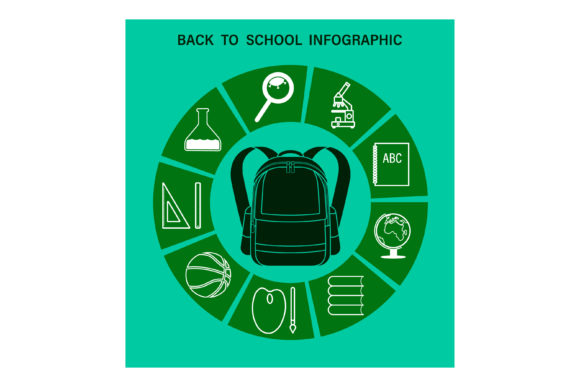
At first glance, the Infographic Back to School on September appears as a colorful vector composition filled with familiar objects. Yet each element carries deliberate meaning. The microscope and test tube represent science and discovery—the hands-on inquiry that defines modern education. The globe evokes geography, global awareness, and the interconnected world students are preparing to navigate. The magnifier with virus adds a timely layer: it reminds us that health literacy and scientific understanding have become essential parts of the school experience. Textbooks anchor the composition in traditional learning, while the basketball introduces physical activity, teamwork, and the importance of extracurricular balance. Together, these items create a visual story that moves beyond simple decoration—they illustrate a well-rounded educational journey.
This infographic is typically designed for September 1, a date that marks the start of the academic year in many regions. Its color palette and layout are optimized for digital and print use, making it suitable for websites, social media posts, classroom posters, newsletters, and promotional flyers. The vector format ensures scalability without loss of quality, so you can resize it for a billboard or a business card while maintaining crisp lines and vibrant hues.
The Visual Vocabulary of School Essentials
Each item in the Infographic Back to School on September carries a distinct connotation that can be leveraged for different communication goals. Consider the following breakdown:
- Microscope & Test Tube – Symbolize inquiry, laboratory work, and the scientific method. Ideal for highlighting STEM programs, science fairs, or lab safety campaigns.
- Globe – Represents geography, cultural studies, and global citizenship. Useful for promoting language courses, exchange programs, or world history units.
- Magnifier with Virus – A contemporary symbol of health awareness and biological study. Effective for content about hygiene protocols, vaccination drives, or biology classes.
- Textbooks – Classic icons of structured learning and academic rigor. Perfect for emphasizing core subjects, homework help resources, or study skills workshops.
- Basketball – Stands for physical education, teamwork, and recreation. Great for promoting sports teams, after-school activities, or messages about work-life balance.
By understanding this vocabulary, you can tailor the infographic to fit specific messages. For example, a school nurse might emphasize the magnifier and virus to create a poster about handwashing, while a coach could feature the basketball to announce tryout dates. The flexibility of the design allows you to highlight certain elements through cropping, layering, or color adjustments.
Who Benefits from the Infographic Back to School on September?
The infographic is not limited to educators. Its versatile design appeals to a broad audience:
- Teachers and School Administrators – Use it in newsletters, bulletin boards, or classroom presentations to create a welcoming atmosphere. The visual cues help students quickly associate the space with learning and activity.
- Parents and Guardians – Share it on family blogs, social media, or school committee communications to celebrate the start of the term. The cheerful vector style resonates with children and adults alike.
- Marketing Professionals and Business Owners – Incorporate it into back-to-school campaigns for products ranging from stationery to educational apps. The infographic conveys relevance and seasonal awareness without requiring custom illustration.
- Content Creators and Designers – Use it as a base for custom graphics. The vector format allows you to recolor, rearrange, or combine elements with other assets, saving time while maintaining professional quality.
- Community Organizations and Libraries – Promote after-school programs, reading challenges, or tutoring services with visuals that instantly communicate the back-to-school theme.
The infographic serves as a communication shortcut: viewers immediately recognize the September context and the values associated with education. This reduces the need for lengthy explanations and increases engagement, especially in fast-paced digital environments where attention spans are short.
Real-World Applications and Scenarios
To appreciate the full value of the Infographic Back to School on September, consider a few concrete scenarios:
Scenario 1: Local Library Summer Reading Wrap-Up
A public library wants to promote its back-to-school event on September 1. They use the infographic as the header for their email newsletter, with the globe and textbooks prominently visible. The image draws families in, and the library adds a brief overlay: "Finish summer reading strong and start the school year ready." The result is a 30% increase in event registration compared to text-only announcements.
Scenario 2: School District Social Media Campaign
A school district posts the infographic on its Facebook and Instagram pages, tagging each school. The basketball and test tube elements resonate with students, who share the post widely. The accompanying caption highlights important dates and supply lists. The campaign reaches over 10,000 parents within the first week, reducing phone inquiries about start times and requirements.
Scenario 3: Educational App Developer Landing Page
A startup creating a science-learning app uses the infographic as a background image on its September landing page. The microscope and magnifier with virus visually align with the app's content. The page sees a 15% higher conversion rate compared to the previous month's generic design, demonstrating how relevant visuals can directly impact user trust and action.
These examples illustrate that the infographic is not merely decorative—it actively supports communication goals by creating immediate context and emotional resonance.
Strengths and Practical Considerations
Like any tool, the Infographic Back to School on September has strengths and limitations worth evaluating before use:
- Strength: Instant Recognition – The combination of school items forms a visual shorthand that works across cultures and age groups. Most viewers will immediately understand the back-to-school theme without additional explanation.
- Strength: Versatility – Available in vector format, the infographic can be resized, recolored, and adapted for digital ads, printed banners, social media posts, and even merchandise like tote bags or notebooks.
- Strength: Balanced Composition – The arrangement of items is carefully designed to avoid clutter. Each element has breathing room, making the graphic easy to read at a glance.
- Consideration: Theme Specificity – The infographic is optimized for September and back-to-school contexts. Using it outside this window (e.g., in December or during summer break) may confuse audiences or feel out of place.
- Consideration: Generic Style – Some users may prefer a more unique or branded aesthetic. If your organization uses specific colors or illustration styles, you may need to customize the vector file to align with existing visual identity.
- Consideration: Cultural Relevance – While the icons are widely recognized, certain items (like basketball) may resonate more in regions where the sport is popular. Consider your audience's context when emphasizing specific elements.
Evaluating the Infographic for Your Needs
Before committing to the Infographic Back to School on September for a project, ask yourself a few key questions:
- What is the primary message? – If your content focuses heavily on science or health, the microscope and magnifier with virus should be prominent. If the message is about holistic education, ensure the basketball and globe are visible.
- Where will it appear? – For digital use, check that the file resolution and aspect ratio match your platform. For print, confirm the color mode (CMYK vs. RGB) and minimum size to avoid pixelation.
- Who is the target audience? – Young children may respond best to the colorful, playful style. Older students and professionals may prefer a more minimal or muted version. The vector format allows you to adjust saturation and contrast accordingly.
- Does it complement or compete with other visuals? – If your page already contains busy graphics, the infographic might add visual noise. Use it as a focal point rather than an afterthought.
When used thoughtfully, the infographic serves as a visual anchor that organizes attention and reinforces your message. When used carelessly, it can distract or dilute your communication. The difference lies in intentional placement and customization.
Practical Tips for Maximizing Impact
If you decide to use the Infographic Back to School on September, here are actionable ways to enhance its effectiveness:
- Layer text strategically – Place headlines, dates, or calls to action in the negative space around the items. Avoid covering the central elements unless you intentionally want to de-emphasize them.
- Use color psychology – The vector likely comes in bright, warm tones. If your brand uses cooler colors, adjust the hue balance while keeping the overall energy intact.
- Animate for digital use – In video or web contexts, consider a subtle animation where items gently float or pulse. This increases dwell time without overwhelming the viewer.
- Pair with relevant copy – The infographic works best when accompanied by text that echoes its themes. For example, "Explore, Learn, Grow" aligns naturally with the globe and microscope, while "Mind, Body, Spirit" pairs well with textbooks and basketball.
Remember that the Infographic Back to School on September is a starting point, not a finished message. Your unique context, audience, and goals will determine how it should be used. Treat it as a flexible resource that adapts to your needs rather than a fixed template that dictates your content.
Conclusion: A Visual Tool for a Season of Renewal
September 1 marks more than a date on the calendar—it represents a collective return to routine, discovery, and growth. The Infographic Back to School on September captures this spirit through a carefully curated set of school items that span science, geography, health, reading, and physical activity. Its value lies not only in its aesthetic appeal but in its ability to communicate complex ideas quickly and emotionally. Whether you are a teacher preparing a classroom, a parent organizing a study space, a marketer launching a seasonal campaign, or a creator looking for ready-made assets, this infographic offers a foundation that saves time while delivering impact. By understanding its components, strengths, and best-use scenarios, you can harness its potential to connect with your audience in a meaningful way—one that honors the timeless ritual of going back to school.