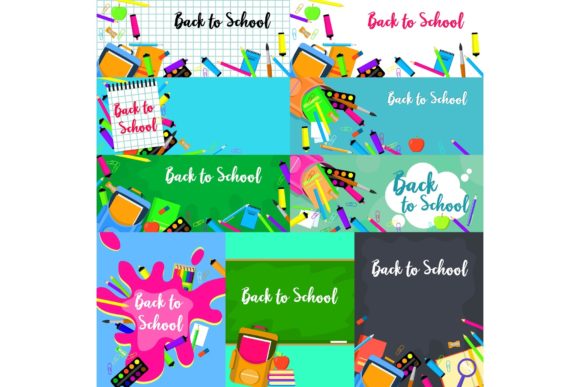
Back to School Desk Banner Concept Set: What to Look For and What to Avoid
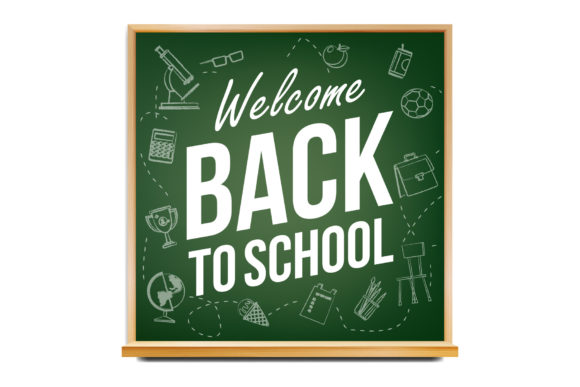
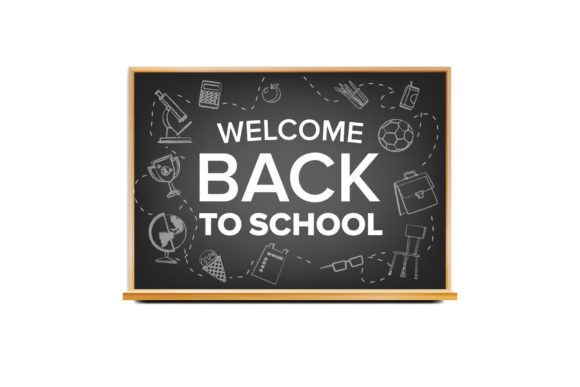
Creating seasonal marketing materials or classroom resources often starts with a solid visual foundation. The Back to School Desk Banner Concept Set offers a collection of pre-designed illustrations centered on green desk tools and supplies, providing a convenient starting point for banners, social media posts, and web graphics. But convenience alone does not guarantee good results. Many people download these sets without fully understanding what they are getting or how to use them effectively, leading to wasted time and disappointing outcomes.
This article walks through common mistakes people make when selecting and applying such banner concept sets, and offers practical advice to help you get the most out of your purchase or download. Whether you are a small business owner, a blogger, an educator, or a freelancer, knowing what to check beforehand can save you frustration and elevate your final product.
Mistake One: Assuming All Banner Sets Are Ready to Use Immediately
A common misunderstanding is that a banner concept set arrives as a finished graphic that requires no additional work. In reality, these sets typically provide concept illustrations and layouts, not final, print-ready files. The Back to School Desk Banner Concept Set includes multiple formats—JPG, EPS, AI, PSD, PNG—which serve different purposes. A JPG preview is useful for quick mockups, but an AI or EPS file requires vector editing software to customize colors, resize elements, or rearrange the composition.
What happens when you ignore the format details
If you open a PNG file expecting to edit individual objects, you will find yourself stuck with a flat image. You cannot change the color of a single pencil or move a notebook easily. This limits flexibility and forces you to work around the original design rather than tailoring it to your specific needs.
Better approach: Match the format to your workflow
- Use AI or EPS files if you plan to customize elements in Adobe Illustrator or a similar vector program.
- Use PSD files if you want to layer adjustments in Photoshop while preserving editable text and shapes.
- Use PNG or JPG only when you need a static image for quick drafts or final use without modifications.
Before you download or purchase, check which formats are included and confirm that you have the software required to open them. This small step prevents frustration later.
Mistake Two: Overlooking the "Concept" Nature of the Set
The word "concept" is important. A Back to School Desk Banner Concept Set presents ideas and layouts for banners, not finished, branded materials. The illustrations of green desk tools, notebooks, pencils, and related supplies are arranged in sample compositions. They show possibilities, not final deliverables.
Why this matters for your project
Using a concept illustration as-is without adding your own branding, text, or visual identity can make your material look generic. Other businesses or creators may have purchased the same set, so without customization, your banner risks blending in rather than standing out.
How to turn a concept into a finished piece
- Add your own headline and call-to-action text. The concept layout may include placeholder text or no text at all.
- Adjust the color palette. Even if the set uses green tones, you can shift hues to match your brand guidelines.
- Rearrange or remove elements. Not every supply needs to appear in every banner. Focus on what fits your message.
- Incorporate your logo and contact information. These are rarely part of the concept set and must be added separately.
Think of the banner concept set as a starting point—a collection of high-quality illustrations and layout ideas—rather than a finished product. The real value comes from how you adapt it.
Mistake Three: Ignoring Resolution and Scalability Requirements
Banner concepts are often designed at a specific size or resolution. Using them without checking dimensions can lead to pixelated images when scaled up, or awkward cropping when forced into a different aspect ratio. The Back to School Desk Banner Concept Set may include files at a standard web-friendly resolution, but your project might require larger formats for print or different dimensions for social media platforms.
Practical consequences of ignoring resolution
Stretching a small JPG to fit a wide banner will blur edges and reduce professionalism. Conversely, using a high-resolution vector file at a tiny size is inefficient but not harmful. The real issue is assuming one file fits all use cases.
What to check before using the files
- Review the file specifications included in the product description or readme file.
- Test the vector files (AI, EPS) for scalability. They should scale cleanly to any size.
- For raster files (JPG, PNG, PSD), note the pixel dimensions. Ensure they meet your minimum requirements for the intended platform.
- Export at the correct resolution for your medium: 72 DPI for web, 300 DPI for print.
Taking two minutes to verify dimensions at the start can prevent hours of rework.
Mistake Four: Forgetting to Check Licensing and Usage Rights
Banner concept sets come with specific licenses. Some allow commercial use, others restrict use to personal projects, and many prohibit redistribution or resale of the raw files. The Back to School Desk Banner Concept Set likely falls under a standard commercial license, but terms vary by seller or platform.
How licensing mistakes affect your work
Using a graphic in a product you sell, such as a printed banner for a client or a digital template on a marketplace, could violate the license if it is not permitted. This can lead to takedown notices, financial penalties, or loss of reputation.
Steps to take before downloading
- Read the license summary provided on the product page.
- Look for limitations on number of users, number of projects, or allowed media types.
- Check if credit is required—some licenses require attribution even for commercial use.
- Save a copy of the license for your records.
If you are unsure about a specific use case, contact the seller directly. Most are happy to clarify terms.
Mistake Five: Overlooking the Style and Theme Alignment
The set focuses on green desk tools and supplies with a flat illustration style. This aesthetic works well for modern, clean, and approachable designs. However, if your brand uses a different visual language—such as detailed textures, vintage illustrations, or bold photographic imagery—this set may feel out of place.
Why style mismatch harms your message
Inconsistent visuals confuse your audience and reduce trust. A bright, flat illustration style paired with a corporate, serious tone can feel mismatched. Similarly, using green-toned supplies for a school event when your brand colors are red and yellow may require significant recoloring.
How to evaluate fit before committing
- Review the sample images carefully. Look at the illustration style, color palette, and level of detail.
- Consider your target audience. Flat illustrations appeal to younger demographics and casual settings, while more detailed or realistic styles suit formal contexts.
- Test a single file in a mockup before purchasing a full set if possible.
- Plan for customization time. Even if the style is close, you may need to adjust colors or remove elements to align with your brand.
Choosing a concept set that naturally fits your existing visual identity reduces editing work and creates a more cohesive final product.
Mistake Six: Neglecting to Plan the Banner Layout and Hierarchy
A banner concept set provides illustrations and composition ideas, but it does not automatically solve layout problems such as text placement, visual hierarchy, or readability on different screen sizes. Many users paste their content directly into the concept layout without adjusting spacing, font size, or element prominence.
What goes wrong with poor layout planning
- Text may overlap with key illustrations, making it hard to read.
- The most important message (such as a sale date or event name) may be too small or positioned in a low-visibility area.
- On mobile devices, the banner may crop important elements if not tested for responsive scaling.
Better planning steps
- Define your primary message first. That should be the most prominent visual element.
- Use the concept layout as a guide, not a template. Move and resize elements to create clear visual flow.
- Maintain contrast between text and background illustrations. Light text on a busy illustration loses readability.
- Test the banner in multiple sizes if it will appear on different devices or platforms.
Taking time to think through the layout converts a generic concept into a purpose-built banner that communicates effectively.
Mistake Seven: Relying Solely on the Included Files Without a Backup Workflow
Digital files can become corrupted, lost, or accidentally overwritten. The Back to School Desk Banner Concept Set may be available for download only once or for a limited time, depending on the platform. Some users assume they can always return to re-download, only to find the link expired or the product removed.
How this affects your project
Losing the original editable files means you cannot make changes later. If you need to update a banner for next year's campaign, you may have to start from scratch or buy a new set.
Simple precautions
- Back up all files to at least two locations: your local drive and a cloud storage service.
- Keep the original ZIP archive intact, including any license files.
- Save your customized version in the native format (AI, PSD) so you can edit later.
- Set a reminder to check the download policy of the platform. Some allow unlimited access; others do not.
A few minutes of organization at the outset protects weeks of work.
Putting It All Together: A Practical Checklist
Before you use the Back to School Desk Banner Concept Set in a project, run through these checks:
- Formats: Do you have the right software to open AI, EPS, or PSD files if needed?
- Licensing: Does your intended use fall within the allowed terms?
- Resolution: Will the files work at your target size and medium?
- Style: Does the flat illustration aesthetic fit your brand and audience?
- Customization: Have you planned time to add text, branding, and color adjustments?
- Layout: Is your message clearly prioritized and readable across devices?
- Backup: Are the original and edited files safely stored?
By addressing each of these points, you avoid the common pitfalls that turn a promising concept set into a disappointing experience. The result is a professional, tailored banner that communicates effectively and reflects well on you or your brand.